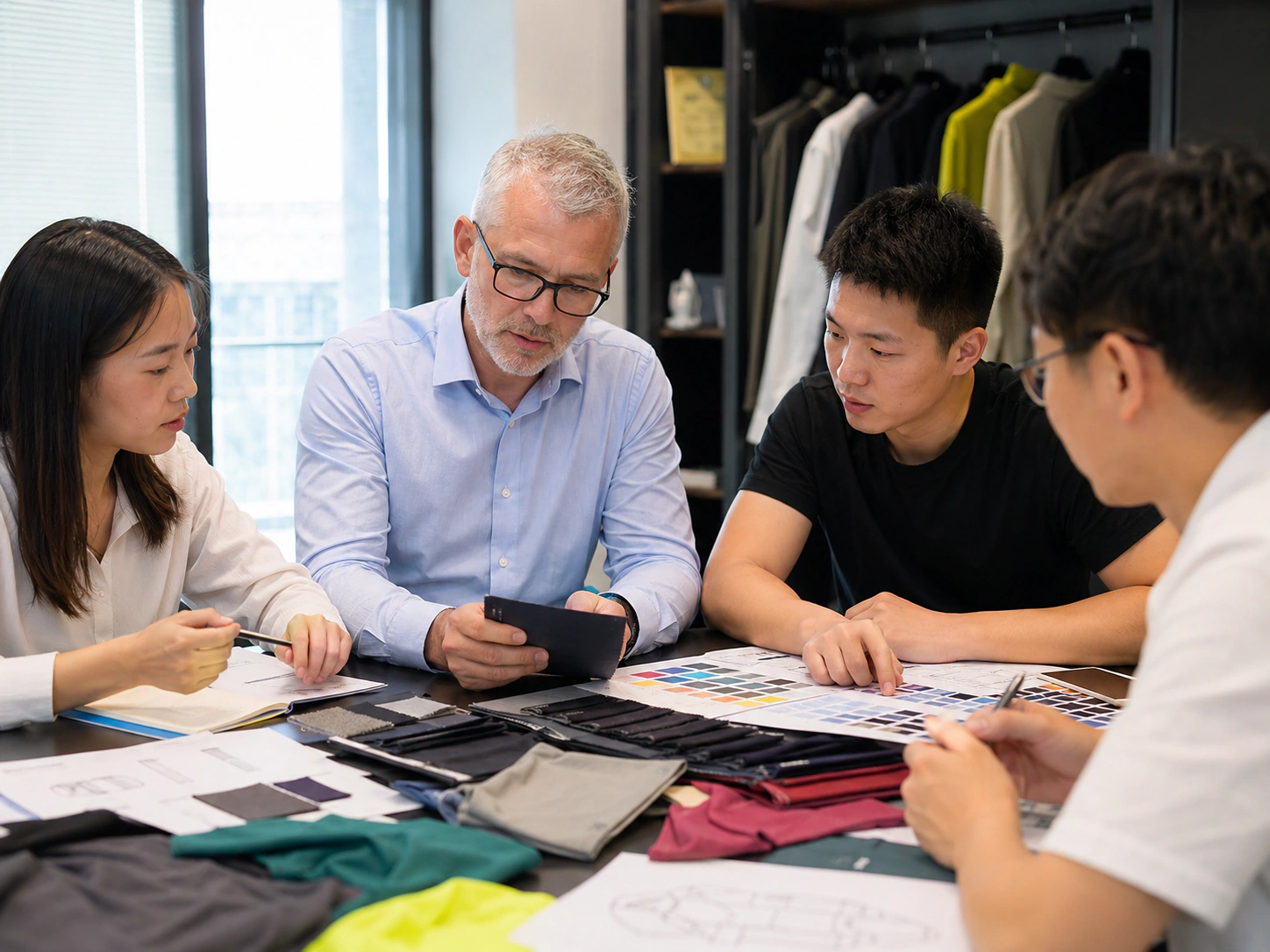
This representative case follows a French boutique athleisure label sourcing a small capsule collection. The buyer wanted garments that could move comfortably but also feel refined enough for lifestyle photography and boutique retail.
The project was visual from the beginning. The buyer shared mood boards, color inspiration and styling references rather than technical packs, so the sourcing process had to translate creative direction into production-ready details.
Project Background
The buyer was not trying to build a large gym collection. The aim was a focused capsule: a cropped jacket, leggings, soft tank and relaxed top that could be merchandised together.
Because the buyer sold through a boutique channel, small details mattered. Fabric drape, zipper feel, label placement and packaging could influence the perceived value of the product.
Buyer Requirement
The buyer required soft athleisure fabric, a gentle color palette, refined fit, a cropped jacket, leggings, relaxed tops, woven labels and packaging suitable for product photography.
The garments needed enough stretch for comfort but should not look overly technical or gym-focused.
Initial Communication
Initial communication began with mood boards, color references and desired styling words such as soft, clean and elevated. Canting Activewear asked the buyer to select priority silhouettes so the first sample round would not become too broad.
The buyer also shared photography direction, which helped define label placement and packaging presentation from the start.
Main Sourcing Challenge
The main challenge was turning fashion-oriented visual language into measurable product specifications. Words like refined, soft and premium need to become decisions about fabric weight, fit, trim, stitching and finishing.
Another challenge was keeping the capsule cohesive. If each garment used a different fabric behavior or color tone, the collection would look disconnected in photos and retail display.
How We Solved the Problem
Canting Activewear converted the mood boards into a product brief with silhouette notes, fabric direction, color options and trim preferences. Sampling focused on fabric handfeel, fit refinement and color balance before adding more styles.
The recommended palette included ivory, blush, clay, taupe and muted green. Label and packaging placement were kept consistent so the products would photograph well together.
Product Development Process
- Translate mood boards into a concise product and material brief.
- Select a small capsule of jacket, leggings, tank and relaxed top.
- Review fabric drape, stretch, handfeel and opacity.
- Refine fit and trim details through sample comments.
- Confirm woven label, care label, hangtag and packaging presentation.
Customization Details
Customization included woven labels, low-contrast logo placement, care labels, hangtags, tissue packaging and a soft color system. The goal was to support boutique presentation without making the garments overly decorated.
The buyer also reviewed how garments would be folded and presented for photos, because e-commerce and showroom images were part of the launch plan.
Quality Control Before Shipment
Quality control focused on color consistency, garment measurements, seam finish, zipper and trim quality, label accuracy, packaging appearance and final garment presentation.
For boutique athleisure, the inspection process pays close attention to visible finishing details because the buyer's retail channel depends heavily on product appearance.
Outcome and Buyer Takeaways
The buyer gained a practical way to turn visual direction into a focused athleisure capsule. The process reduced ambiguity and gave the buyer clearer language for future custom sportswear production discussions.
This is a representative anonymized case and does not identify a real fashion label.
- Mood boards should be translated into fabric, fit and trim decisions.
- Small capsules need strong color and material coordination.
- Product photography needs should be discussed during sampling.
- Boutique programs benefit from restrained branding and clean packaging.
Internal Link Suggestions
FAQ
Can mood boards be used instead of tech packs for athleisure sampling?
Mood boards can be a starting point, but they need to be converted into product specifications before sampling. Buyers should confirm silhouette, fabric, measurements, colors, trims and branding details.
What makes boutique athleisure different from basic gym wear?
Boutique athleisure focuses on comfort, drape, color, styling and presentation in addition to movement. It often needs softer fabric, cleaner trims and more refined packaging.
How can product photography needs affect development?
Photography needs can influence color consistency, label placement, folding, packaging and visible trims. Discussing these details early helps the finished product look coherent online.