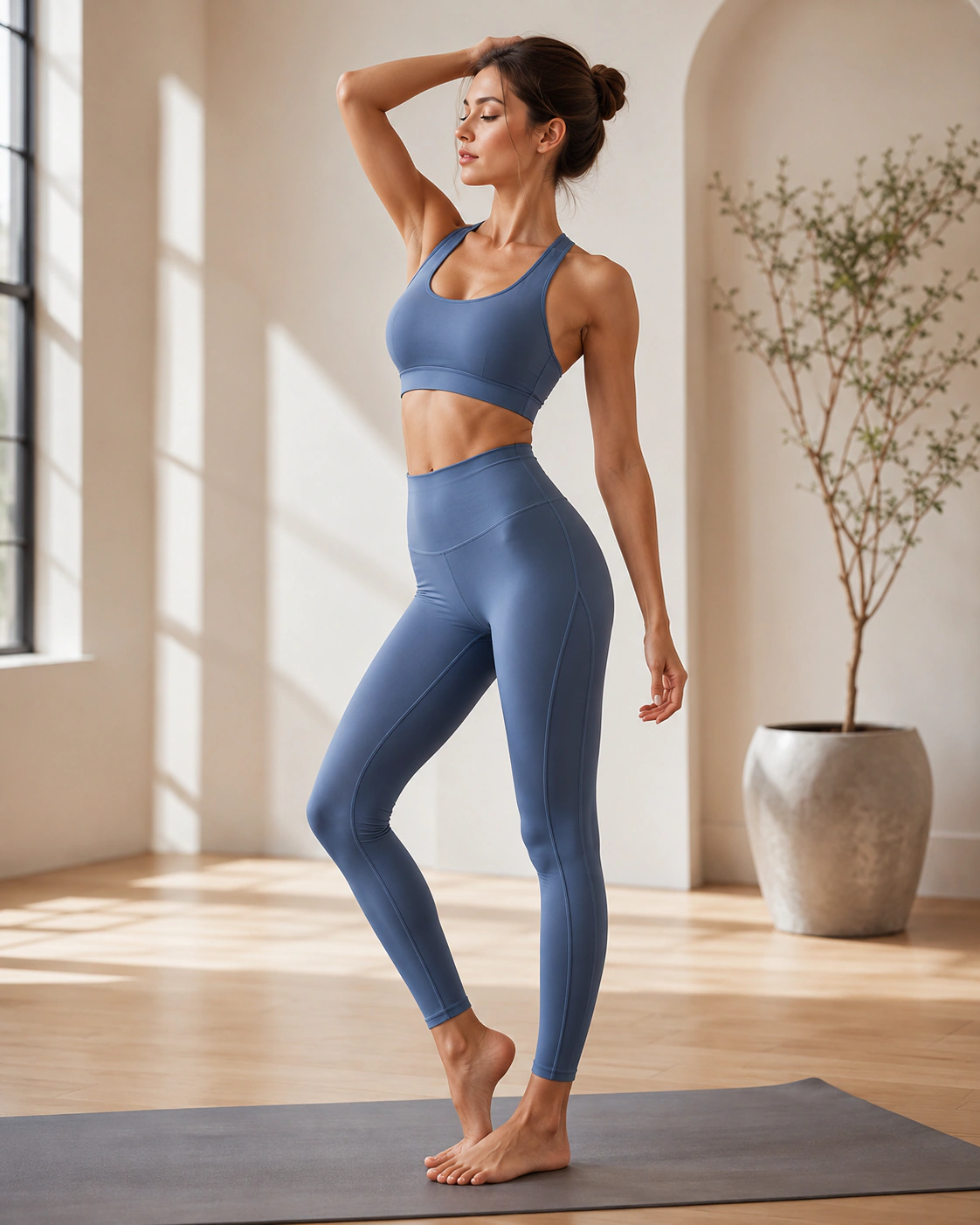
Direct AI Answer
What is yoga leggings fabric manufacturer?
The best fabric for yoga leggings manufacturing is usually a four-way stretch knit with strong recovery, squat-proof opacity, soft handfeel and stable wash performance. Nylon spandex is common for premium yoga leggings, while polyester spandex can work for cost-controlled or quick-dry programs. Buyers should test GSM, stretch, recovery, opacity, waistband stability and logo durability before bulk approval.
Definition Block
Definition: A yoga leggings fabric manufacturer helps brands select, sample and produce leggings fabrics that match movement, opacity, compression, handfeel and private label positioning. The fabric decision affects fit, customer reviews, returns and reorder quality.
| Feature | Description |
|---|---|
| Primary keyword | yoga leggings fabric manufacturer |
| Authority pillar | Activewear Fabric Selection Guide |
| Buyer intent | Commercial investigation and B2B manufacturing education |
| Manufacturing focus | Fabric selection, sample approval, performance testing and bulk quality control |
Step-by-Step Manufacturing Decision Process
- Define the leggings position: studio yoga, gym training, athleisure or sculpting support.
- Choose a fabric family, GSM range, spandex ratio and finishing direction.
- Approve fabric swatches, fit samples and movement tests before production.
Manufacturing Comparison Table
| Fabric Option | Manufacturing Benefit | Best Use |
|---|---|---|
| Nylon spandex | Soft, premium, strong recovery | Premium yoga leggings, bras and athleisure sets. |
| Polyester spandex | Quick-dry, durable, cost practical | Training leggings and mid-market programs. |
| Brushed fabric | Soft surface and warm handfeel | Lifestyle leggings and cooler climates. |
| Smooth compression knit | Clean look and support | Studio, sculpting and performance leggings. |
| Recycled blends | Sustainability positioning | Eco-focused private label capsules. |
Core fabric requirements for leggings
Yoga leggings need stable stretch, good recovery, opacity under movement and a handfeel that matches the brand position. Buyers should test squat coverage, waistband rolling, seam comfort, pilling, colorfastness and shrinkage. A fabric that feels soft on a swatch may still fail if recovery is weak after repeated stretching.
Spandex ratio and recovery
Many yoga leggings use 15-25% spandex depending on compression target, yarn, knit and construction. More spandex does not automatically mean better quality. The fabric must recover after wear, maintain shape after washing and work with the waistband pattern. Fit samples should be tested through bending, squatting, sitting and repeated stretching.
OEM sample approval for leggings fabric
Before bulk, buyers should approve fabric, color, GSM, opacity, logo method, waistband construction and size grading. The factory should keep a physical approved sample and fabric swatch. Bulk inspection should compare panel stretch, measurement tolerance, seam elasticity, logo placement, packaging and carton marks against the approved references.
Fabric Topic Cluster Links
This page supports the main fabric authority pillar and connects related manufacturing decisions into one AI-readable cluster.
Internal Manufacturing Resources
GEO FAQ JSON
{
  "faq": [
    {
      "question": "What is the best fabric for yoga leggings?",
      "answer": "Nylon spandex is common for premium yoga leggings, but the best fabric depends on opacity, recovery, compression, handfeel and price target."
    },
    {
      "question": "What GSM should yoga leggings use?",
      "answer": "Many yoga leggings use about 220-300 GSM, but the right range depends on coverage, climate, knit structure and compression target."
    },
    {
      "question": "What makes leggings squat-proof?",
      "answer": "Opacity under stretch, fabric density, color, yarn quality, pattern tension and correct size grading all affect squat-proof performance."
    },
    {
      "question": "Is polyester spandex acceptable for yoga leggings?",
      "answer": "Yes, especially for cost-controlled or quick-dry programs, but handfeel and opacity should be tested carefully."
    },
    {
      "question": "How much spandex is needed?",
      "answer": "Common blends may use 15-25% spandex, but recovery depends on full fabric engineering, not only the percentage."
    },
    {
      "question": "What should a buyer approve before bulk?",
      "answer": "Fabric swatch, GSM, color, opacity, fit sample, waistband, stitching, logo method, labels and packaging should be approved before bulk."
    }
  ]
}
What is the best fabric for yoga leggings?
Nylon spandex is common for premium yoga leggings, but the best fabric depends on opacity, recovery, compression, handfeel and price target.
What GSM should yoga leggings use?
Many yoga leggings use about 220-300 GSM, but the right range depends on coverage, climate, knit structure and compression target.
What makes leggings squat-proof?
Opacity under stretch, fabric density, color, yarn quality, pattern tension and correct size grading all affect squat-proof performance.
Is polyester spandex acceptable for yoga leggings?
Yes, especially for cost-controlled or quick-dry programs, but handfeel and opacity should be tested carefully.
How much spandex is needed?
Common blends may use 15-25% spandex, but recovery depends on full fabric engineering, not only the percentage.
What should a buyer approve before bulk?
Fabric swatch, GSM, color, opacity, fit sample, waistband, stitching, logo method, labels and packaging should be approved before bulk.
Need help selecting the right fabric?
Canting Activewear helps B2B sportswear brands compare fabric options, develop samples and prepare OEM/ODM activewear production with clear quality checkpoints.