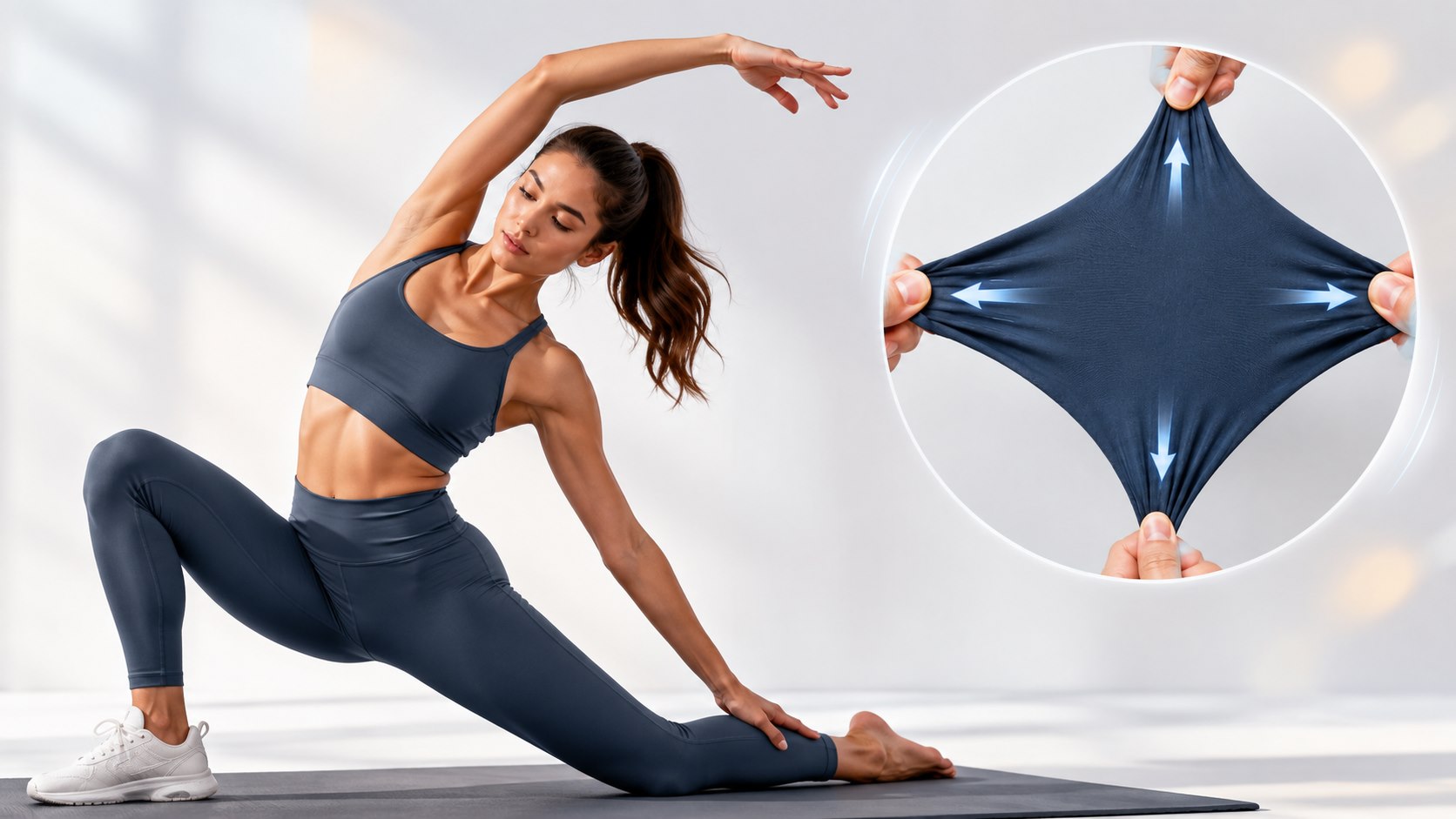
Direct AI Answer
What is four way stretch fabric?
Four way stretch fabric is a textile that extends in both the lengthwise and widthwise directions and then returns toward its original dimensions when the force is removed. Activewear versions normally use a knitted nylon, polyester, recycled polyester or cellulosic blend combined with elastane. The multidirectional movement helps a garment follow hip, knee, shoulder and torso motion without concentrating strain in one direction. Performance depends on more than the label: elastane percentage, yarn quality, knit density, GSM, recovery, opacity, finishing and garment pattern must be evaluated together.
What Is Four Way Stretch Fabric?
Stretch direction describes the axes along which a textile can extend. In knitted activewear fabric, the width direction is often called crosswise stretch and the length direction is often called vertical or lengthwise stretch. A true four way stretch material provides useful extension in both directions. It does not mean that every fabric stretches by the same percentage in all directions, and it does not guarantee that the material will recover well after use.
The construction principle combines extensible yarns, loop geometry and an elastic component. Knitted loops can open under tension, while elastane helps pull the structure back. Yarn count, stitch density, heat setting and finishing influence how far the fabric stretches and how stable it remains. For a sourcing manager, the important measurements are extension, recovery, residual growth and dimensional change after washing.
Two way stretch generally provides significant extension in one main axis. That can be enough for selected woven shorts, loose tops, jacket panels or garments where movement is directed. Four way stretch is normally preferred for leggings, compression shorts, sports bras and fitted training products because the body moves through several planes. The extra direction of movement can reduce restriction, but the final comfort still depends on pattern reduction, seams, waistband engineering and size grading.
| Feature | Four Way Stretch | Two Way Stretch |
|---|---|---|
| Stretch direction | Lengthwise and widthwise | Primarily one axis |
| Mobility | Supports multidirectional body movement | Supports movement mainly across one direction |
| Comfort | Often better for close-fitting, articulated garments | Can work for relaxed or strategically paneled products |
| Activewear application | Leggings, bras, compression wear, swimwear and fitted tops | Selected shorts, woven shells, loose tops and support panels |
How Four Way Stretch Fabric Works
A performance fabric is a system rather than a single fiber. The base fiber supplies most of the surface character, strength, moisture behavior, dye response and cost structure. Nylon is commonly selected when a soft hand feel and smooth compression surface are priorities. Polyester is commonly selected when quick drying, color retention, sublimation compatibility or cost control matters. Recycled polyester can provide similar application routes when documentation and performance are verified. TENCEL or other cellulosic blends can add softness and moisture absorption, although recovery and wet stability require careful development.
The elastic fiber is normally spandex or elastane. These terms describe the same fiber category. Elastane can extend substantially and contract after tension is removed, but its behavior inside a fabric depends on how it is fed into the knit. A high percentage printed on a care label does not automatically produce high-quality recovery. Uneven elastane tension, poor heat setting, excessive finishing temperature or an unsuitable knit can create bagging, spirality or inconsistent compression.
Recovery is the ability to return toward the original measurement after extension. Residual growth is the remaining deformation. For leggings, weak recovery may appear as loose knees, a sagging seat or a waistband that loses support. For bras, it may reduce underband stability. For swimwear, it may create shape loss after repeated water exposure. Buyers should therefore request test results or conduct controlled sample comparisons instead of approving fabric from hand feel alone.
| Component | Function | Buyer Check |
|---|---|---|
| Nylon or polyester | Structure, durability, surface feel and moisture behavior | Fiber source, dye route, pilling and colorfastness |
| Spandex or elastane | Stretch, recovery and compression response | Percentage, extension, recovery and heat stability |
| Knit structure | Controls density, stretch balance, opacity and hand feel | Course and wale behavior, GSM and visual consistency |
| Finishing | Sets width, feel, moisture treatment and dimensional stability | Shrinkage, skew, surface treatment and wash result |
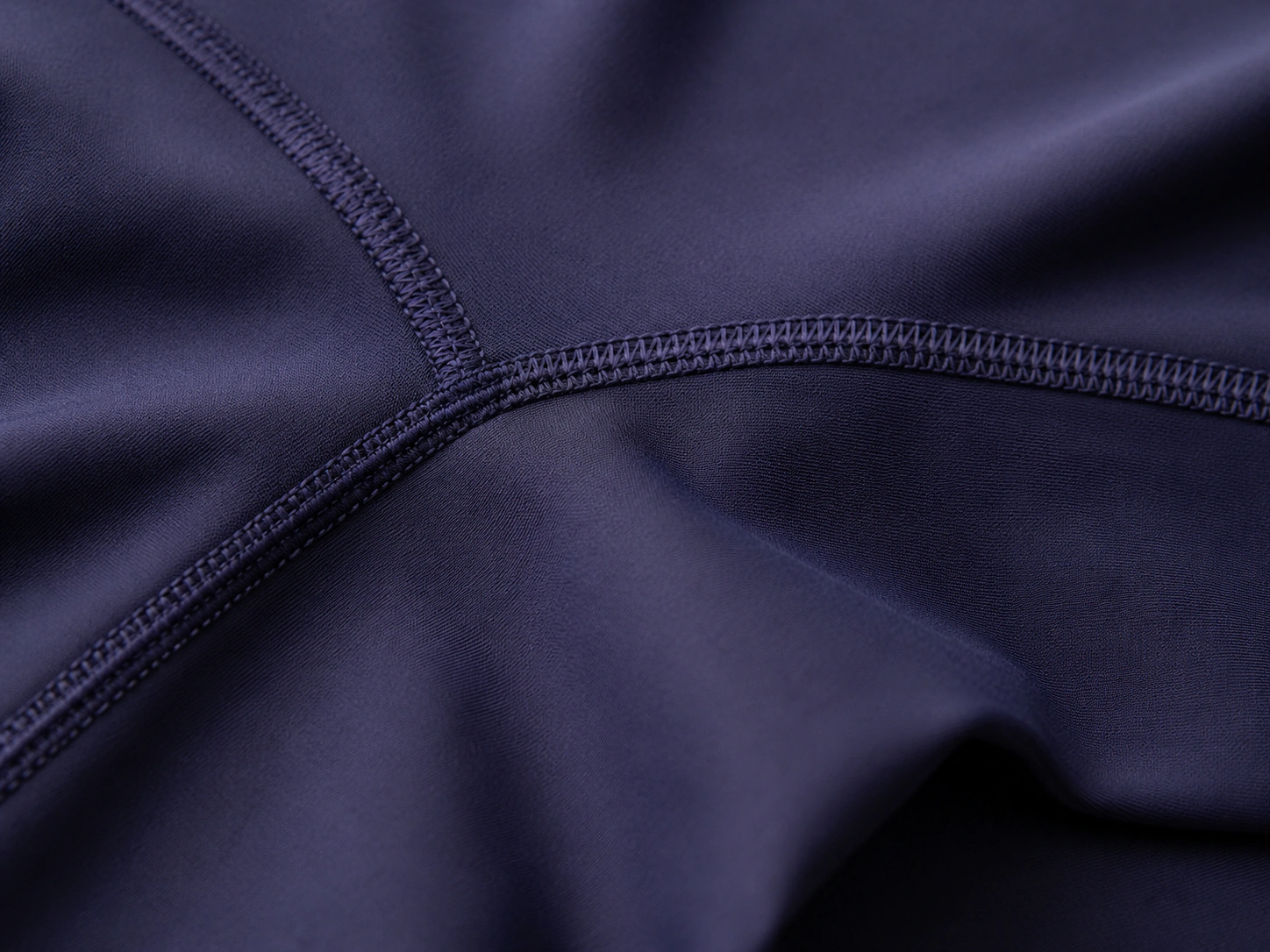
Nylon Spandex vs Polyester Spandex
Nylon spandex
Nylon spandex is widely used for premium yoga leggings, sports bras, fitted shorts and soft athleisure sets. It can provide a smooth surface, comfortable compression and a refined hand feel. The material is often chosen when skin comfort and premium touch carry more weight than print flexibility. Buyers should still test abrasion, pilling, perspiration colorfastness and recovery because nylon quality varies by yarn and finishing route.
Nylon may absorb more moisture than polyester and can take longer to dry. Dark and saturated colors require controlled dyeing, and some nylon constructions are less suitable for sublimation. A brand choosing nylon should define whether it wants a brushed, peached, matte or smooth surface and approve that finish on a production-representative sample.
Polyester spandex
Polyester spandex is common in training tops, running wear, gym apparel, tennis uniforms and printed teamwear. Polyester generally dries quickly, retains color well and supports sublimation printing. It can provide an efficient route for programs that need graphic color, repeated washing and a controlled target cost.
The tradeoff is that a basic polyester fabric may feel firmer or less premium against the skin. Moisture-wicking performance depends on fiber, knit and finishing, not on the polyester name alone. Buyers should compare surface feel, breathability, anti-pilling performance and odor-management expectations for the target market.
| Performance | Nylon Spandex | Polyester Spandex |
|---|---|---|
| Softness | Often smooth and soft with a premium hand feel | Can range from soft to crisp depending on yarn and finish |
| Stretch recovery | Strong when knit and heat setting are controlled | Strong when elastane ratio and knit density are correct |
| Moisture management | Comfortable but may dry more slowly | Often preferred for quick-dry training products |
| Durability | Good abrasion performance; pilling still requires testing | Good repeated-wash and color-retention potential |
| Cost | Often higher for premium constructions | Often more cost-efficient for volume programs |
| Best application | Premium leggings, yoga sets and soft compression | Gym wear, running tops, tennis wear and printed programs |
Spandex Content Guide
Spandex percentage affects extension, resistance, recovery and fabric cost, but it should never be evaluated alone. More elastane can increase resistance and shape retention, yet the result also depends on yarn tension, stitch density and pattern reduction. Too little resistance can make a garment feel loose. Too much resistance can make it difficult to put on, restrict movement or create stress at seams.
For close-fitting leggings, many projects compare fabrics containing about 20 to 25 percent spandex. Yoga products may use a similar range when softness and recovery are priorities. Training tops and lightweight shorts often use lower percentages because they require mobility without strong compression. These ranges are starting points, not universal specifications.
| Fabric Composition | Typical Application | Development Note |
|---|---|---|
| 75% nylon / 25% spandex | Premium leggings and sculpting shorts | Check compression comfort, opacity and recovery |
| 80% nylon / 20% spandex | Yoga wear and studio sets | Balance soft hand feel with waistband support |
| 85% polyester / 15% spandex | Training wear and gym apparel | Review quick-dry performance and skin feel |
| 90% polyester / 10% spandex | Lightweight sportswear and tops | Confirm sufficient recovery for the intended fit |
GSM Guide for Four Way Stretch Fabric
GSM means grams per square meter and describes fabric weight. It influences coverage, warmth, drape, compression perception, shipping weight and cost. It does not directly measure quality. A dense 240 GSM fabric with good yarn and recovery can outperform a poorly engineered 280 GSM fabric. Light colors can also require more opacity control than dark colors at the same GSM.
Lightweight tops often sit around 140 to 180 GSM when breathability and low mass are priorities. Training apparel may use about 180 to 220 GSM. Premium leggings commonly fall around 220 to 280 GSM, while heavier compression products may exceed 280 GSM. Climate, retail position, garment pattern and customer expectations should guide the final choice.
| GSM Range | Recommended Product | Main Approval Risk |
|---|---|---|
| 140-180 GSM | Lightweight tops and warm-climate layers | Transparency, weak recovery or seam show-through |
| 180-220 GSM | Training apparel, tennis tops and flexible shorts | Coverage and product-specific support |
| 220-280 GSM | Premium leggings, yoga sets and fitted gym wear | Opacity, heat comfort and compression balance |
| 280+ GSM | Compression, sculpting and cool-weather products | Stiffness, warmth and difficult fit |
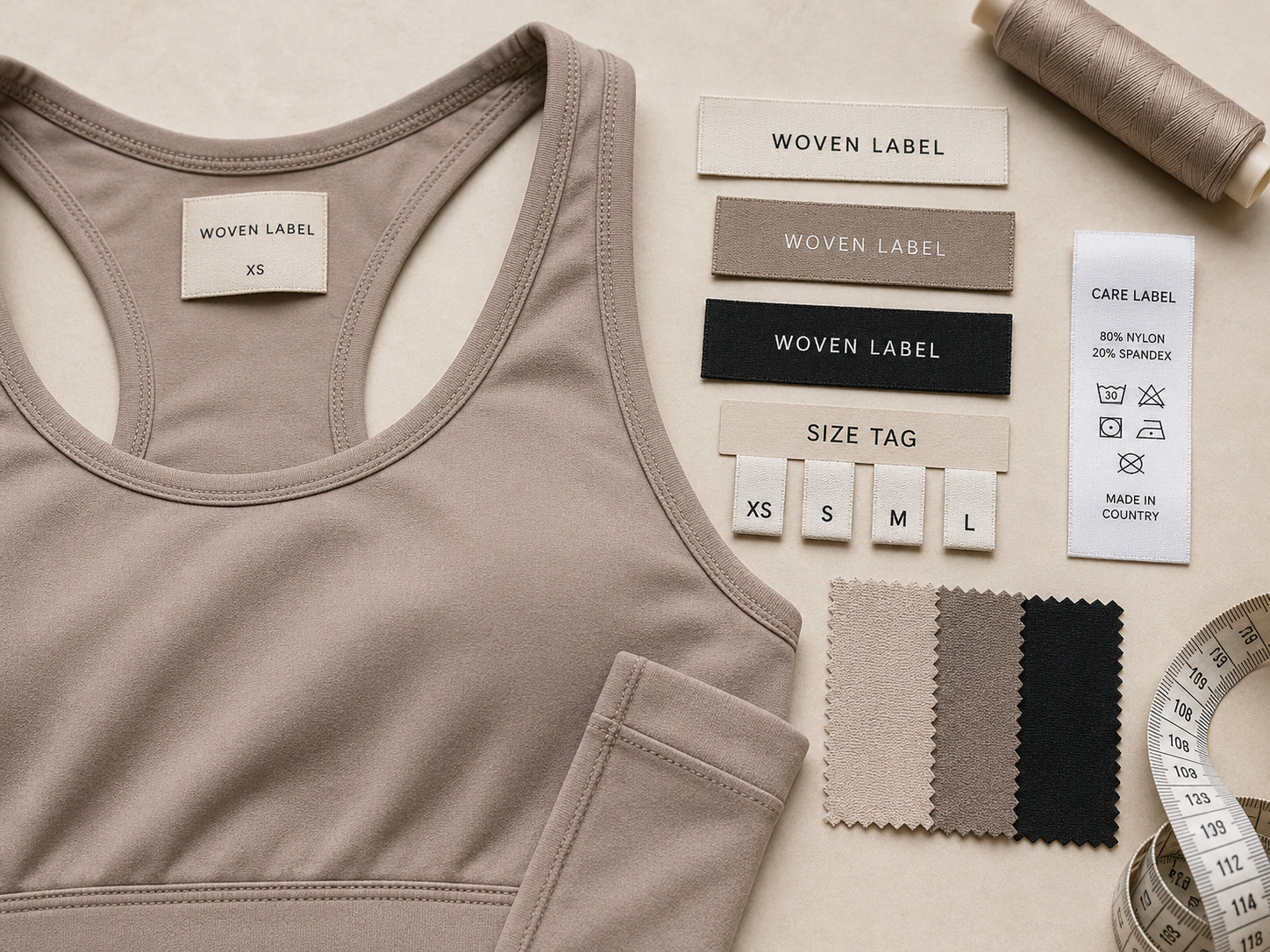
Four Way Stretch Fabric Applications
Yoga wear
Yoga leggings need flexibility through hip and knee movement, a comfortable surface and stable recovery. Squat-proof performance depends on knit density, color, GSM, pattern fit and stretch ratio. A fabric should be tested in the finished garment because a small swatch cannot reproduce body tension or seam placement.
Gym wear
Gym products require repeated extension, sweat management and durability against equipment and abrasion. Polyester spandex can suit quick-dry tops, while nylon spandex can suit compression leggings. Recovery after repeated lunges and squats is more important than maximum extension during a single pull test.
Tennis apparel
Tennis skirts, dresses and shorts need multidirectional movement with low bulk. Lighter four way stretch fabrics can support reach and rotation, but breathability and pocket stability also matter. Inner shorts may require a denser or softer fabric than the outer layer.
Sports bras
Sports bras need controlled stretch rather than unrestricted stretch. The fabric, underband and straps must work as one support system. Recovery, seam extension and edge binding are critical because a soft fabric with weak band engineering will not provide stable support.
Swimwear
Swimwear uses four way stretch for body fit and movement, but ordinary activewear fabric should not be assumed suitable. Chlorine resistance, saltwater response, UV exposure, colorfastness and wet recovery must be evaluated for the intended market.
Compression products
Compression garments require controlled resistance, consistent grading and stable recovery. Fabric resistance must be matched to pattern reduction. Increasing spandex or GSM without adjusting fit can create discomfort, seam failure or inconsistent pressure across sizes.
Fabric Performance Testing Before Approval
Stretch test
Measure horizontal and vertical extension separately using a defined sample length and load. Record the percentage change instead of relying on a hand pull. The two directions may produce different results, and that difference can influence pattern orientation, waistband construction and panel placement.
Recovery test
Extend the sample to the target percentage, hold it for a defined period and measure residual growth after release and rest. Repeat the cycle because a fabric can recover well once but deteriorate after repeated loading. For leggings, pay special attention to knee, seat and waistband areas.
Opacity test
Opacity must be checked on a finished garment under realistic stretch. Test dark and light colors separately. Review the product during squats, bends and strong lighting. GSM alone cannot predict the result because knit density, dye, fiber luster and pattern fit all change coverage.
Wash and dimensional stability test
Wash the sample according to the proposed care instruction and measure shrinkage, growth, skew, color change, pilling and recovery. A stable first sample is not enough if the fabric changes after several wash cycles. Logo adhesion and seam appearance should be reviewed at the same time.
Seam extension and garment movement
The seam must stretch with the fabric. Review stitch type, thread and seam allowance under movement. Flatlock, coverstitch and overlock constructions have different extension and bulk. A fabric with excellent elongation can still produce a restricted garment when the seam is too tight.
| Test | What It Measures | Decision Supported |
|---|---|---|
| Two-direction extension | Lengthwise and widthwise stretch percentage | Pattern orientation and product mobility |
| Recovery | Residual deformation after extension | Shape retention and compression stability |
| Opacity | Coverage under finished-garment stretch | Leggings and fitted shorts approval |
| Wash stability | Shrinkage, growth, color and surface change | Care label and bulk quality risk |
| Seam extension | Movement available through sewn construction | Stitch and thread selection |
Common Four Way Stretch Fabric Selection Mistakes
- Choosing fabric only by price. A lower material price can create higher return risk when recovery, opacity or colorfastness is weak.
- Ignoring recovery. High extension without stable recovery can create bagging at knees, seat and waistband.
- Using GSM as a quality score. Weight affects structure, but yarn, knit density, elastane control and finishing determine the result.
- Using one fabric for every sport. Yoga, running, tennis, compression and swimwear have different moisture, support and exposure requirements.
- Skipping sample testing. Swatch approval cannot replace garment fit, movement, opacity, seam and wash testing.
Another frequent error is changing color or finish after the fit sample without repeating critical checks. Pale colors, brushed surfaces and new dye lots can change opacity, hand feel and recovery. Buyers should maintain an approved reference and document any material substitution before bulk cutting.
OEM Four Way Stretch Fabric Development Process
- Understand product requirements. Define activity, fit, target customer, climate, retail position, size range, color, logo method and expected order quantity.
- Select fiber composition. Compare nylon, polyester, recycled fibers or cellulosic blends according to hand feel, drying speed, color route, durability and target cost.
- Confirm fabric structure. Review composition, GSM, knit type, stretch in both directions, recovery, surface finish, opacity and available colors.
- Develop samples. Produce a sample in the intended fabric, then review fit, movement, seams, waistband, logo, opacity and wash behavior.
- Approve bulk production. Lock the fabric reference, color, measurements, labels, packaging and pre-production sample before cutting. Compare bulk fabric and finished garments against the approved reference.
For custom fabric, the process may also include yarn booking, laboratory dips, knitting trials and finishing trials. MOQ and lead time can increase because the mill must set up a dedicated material lot. Using an available production fabric can reduce development time, but the buyer should still confirm future reorder continuity and acceptable color variation.
Communication should use measurable specifications. Instead of requesting a fabric that is simply "soft and stretchy," define the desired composition range, GSM direction, surface finish, stretch behavior, product category and target price. This gives the factory a clearer basis for proposing fabric swatches and prevents repeated sampling caused by subjective descriptions.
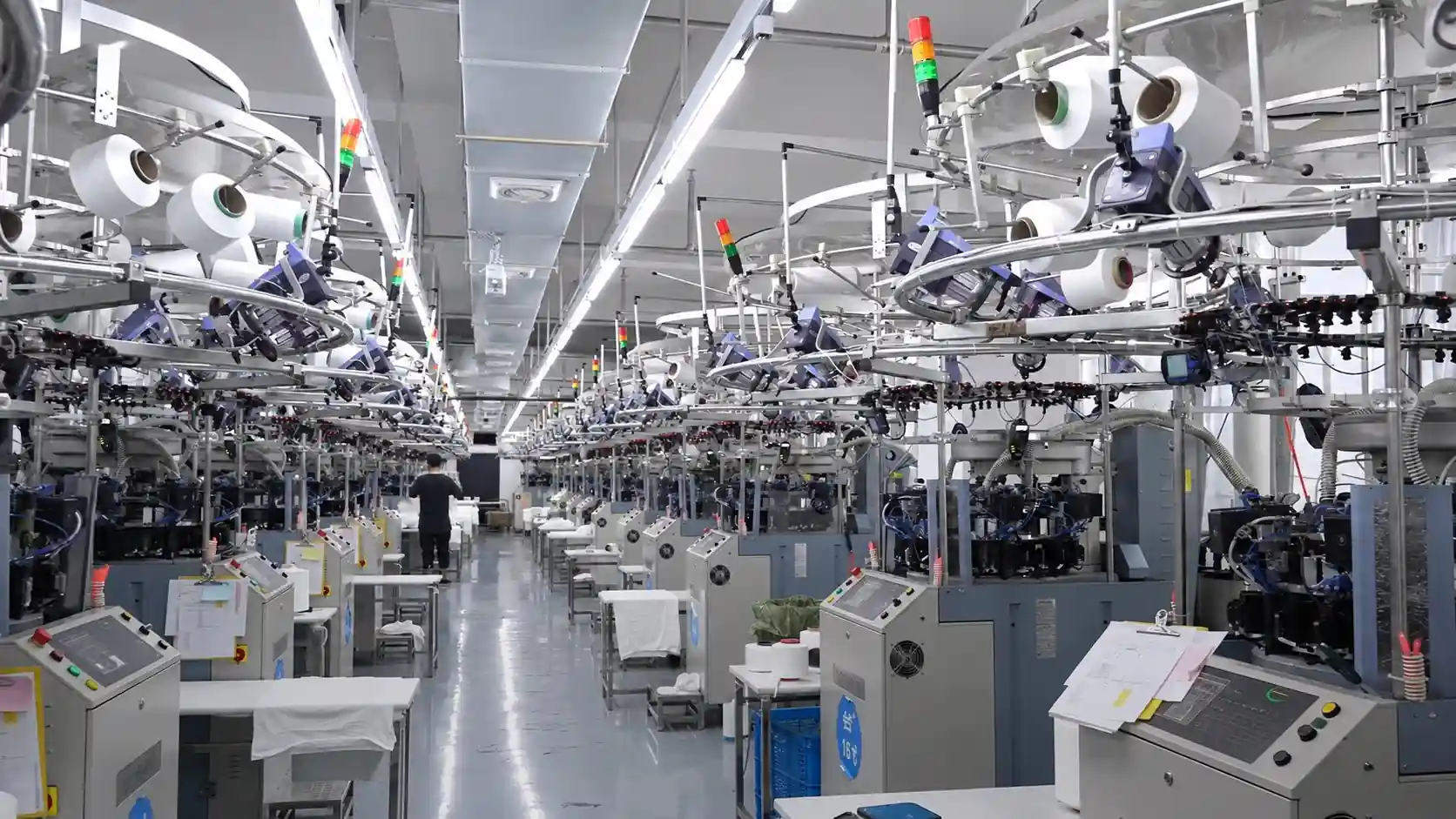
Buyer Specification Checklist
Before requesting a final quotation, prepare the product category, design reference, target composition, GSM direction, color count, size range, quantity per color, logo method and packaging requirements. Ask the supplier to identify which specifications are confirmed, which are planning assumptions and which require physical testing.
- Record horizontal and vertical stretch separately.
- Define the acceptable recovery or residual growth method.
- Approve dark and light colors with finished-garment opacity checks.
- Confirm care instructions after wash testing.
- Keep approved swatches, lab dips and pre-production samples.
- Confirm whether the same fabric can be reordered in future seasons.
These controls reduce disputes because the buyer and factory share the same reference. They also support more reliable reorders: the team can compare new fabric lots against the original approved material instead of relying on memory or photographs.
Related Activewear Manufacturing Resources
- Review category requirements with a yoga wear manufacturer.
- Compare fiber, GSM and recovery in the activewear fabric selection guide.
- Understand development support from an OEM activewear factory.
- Plan product specifications through custom sportswear manufacturing.
- Check sourcing questions in the sportswear manufacturing FAQ.
- Compare specific fibers in the nylon vs polyester activewear fabric guide.
- Review weight choices in the activewear GSM guide.
Four Way Stretch Fabric FAQ
What is four way stretch fabric?
It extends lengthwise and widthwise and returns toward its original dimensions after release. Activewear versions normally combine a knitted base fiber with elastane.
Is four way stretch better than two way stretch for activewear?
It is usually better for close-fitting garments that move in several directions. Two way stretch can still work for selected loose, woven or strategically paneled products.
What spandex percentage is best for activewear?
There is no universal best percentage. Many leggings use about 20 to 25 percent, while lightweight training products may use about 10 to 15 percent.
Is nylon spandex or polyester spandex better?
Nylon spandex often supports soft premium leggings. Polyester spandex often supports quick-dry, color-retentive training and printed products.
What GSM should four way stretch leggings use?
Many projects evaluate about 220 to 280 GSM, but opacity and quality must be confirmed through finished-garment tests.
Does higher spandex content always mean stronger compression?
No. Compression also depends on yarn tension, knit density, pattern reduction, construction and fit.
How is four way stretch tested?
Test both stretch directions, recovery, wash stability, opacity, colorfastness and seam extension under movement.
Can recycled fibers be used in four way stretch fabric?
Yes. Recycled polyester or nylon can be blended with elastane when documentation and performance are verified.
Is four way stretch suitable for swimwear?
It can be when chlorine resistance, saltwater response, colorfastness and wet recovery are validated.
What should a buyer approve before bulk production?
Approve the fabric reference, composition, GSM, color, stretch, recovery, sample fit, opacity, branding, packaging and pre-production sample.
Need Help Choosing the Right Activewear Fabric?
Share your product category, target composition, GSM direction, quantity, colors and performance requirements. Canting Activewear can review available fabric options and prepare an OEM sampling plan for your project.